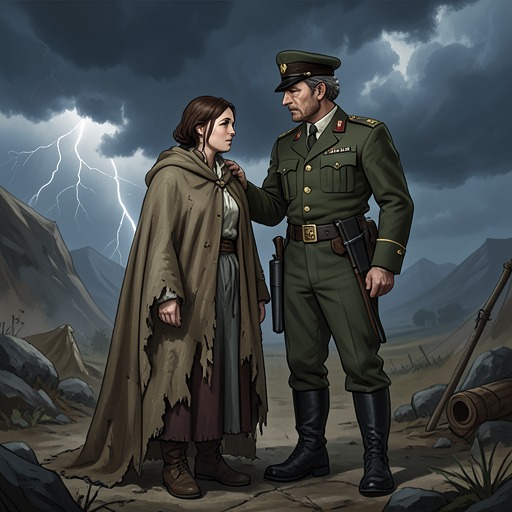
Kalith protection oath
Bound by DarknessThe Kalith protection oath is the binding duty that defines Larem q’Jones’s identity after exile from Kalithia and gives his actions in the human world their moral coherence. As a Blademate to a Sworn Guardian, he understands protection not as a discretionary kindness but as the purpose of his life: those unable to defend themselves fall under his obligation, regardless of species or political allegiance. The oath therefore becomes both a code of honor and a source of conflict, requiring Larem to protect human beings while remaining estranged from the Kalith society whose values once gave his life a settled place.
Definition and Moral Basis
The oath is inseparable from Larem’s former status as a Blademate to a Sworn Guardian. Before his exile, that relationship had given him a clear position within Kalith society and allowed him to serve his people honorably. In Seattle, by contrast, he accepts a small paycheck from the Paladins for teaching weapons practice and is still learning how to live without the institutional and cultural structure he once knew. His continued attachment to the oath preserves a sense of purpose, but it also keeps his former identity alive when he is unsure whether he can belong in either world.
The oath’s reach is deliberately broader than ethnic loyalty. When Kalith Others confront Sasha Willis in the tunnels, Larem identifies himself as a Blademate to Lusahn q’Arc and a sworn protector of those who cannot defend themselves, human or Kalith. The statement answers the Others’ accusation that he has become a traitor by living in the light: Larem’s allegiance is not to racial separation or to whichever side claims him, but to the vulnerable person immediately placed in his care. That interpretation of the oath directly rejects the Others’ claim that Sasha’s humanity alone makes her expendable.
Protection in Conflict
The tunnel confrontation shows the oath operating under its most dangerous conditions. Larem recognizes that the Others are his own people and that the encounter is likely to end in violence, yet he still attempts to address them as fellow warriors before raising his weapon. He lowers his blade in an effort to reduce the tension and offers to use the healing gift strengthened by the light of the human world to restore their honor after the sickness that has consumed them. Only when the leader threatens Sasha and orders the others to attack does Larem fully accept the role of challenger.
His defense of Sasha requires him to kill Kalith warriors from his homeland. The experience is not presented as a triumphant victory: he curses the gods for forcing him to kill his own people, and afterward he feels that another large part of his soul has been lost. The oath thus protects the immediate victim while imposing a lasting spiritual cost on the protector. Larem cannot preserve both the lives of Sasha and the attacking Others; his duty gives him a decision, but not an outcome free of moral injury.
After the fight, Larem refuses to treat the matter as finished simply because the attackers are dead. He rejects Sasha’s concern about whether he is all right, pushes a body from his lap, and remains troubled by the Paladins’ unknown method of disposing of the corpses. Although he can still hear fighting at the Barrier and is uncertain which side he might join if he entered it, he remembers that his duty is not complete. He has promised to get Sasha to safety, and that promise becomes the immediate task that keeps him from abandoning the scene to his grief and confusion.
Discipline, Challenge, and Consequence
The oath also governs Larem’s response to human misconduct. When Duke insults Sasha and behaves toward her in a way Larem considers unforgivable, Larem treats the offense as more than a personal quarrel. He explains that Duke had to be punished for what he said about Sasha, Hunter Fitzsimon, and the relationship between Larem and Sasha. In his understanding, a Blademate who allowed such an insult to pass without challenge would not be worthy of the title.
That code leads him to offer Duke a chance to defend himself with Lonzo Jones’s sword. Larem holds the weapon out pommel first and makes clear that, when he explains Duke’s death to Devlin Bane, he wants to be able to say that he gave Duke an opportunity to fight. When Duke refuses even to take the blade, Larem slides it across the floor rather than killing an unarmed man without first making the terms of the challenge explicit. The scene places Kalith martial procedure beside human legal and institutional procedure, revealing how easily a protection code can become an instrument of violence when translated into a modern setting.
Larem does not consider the challenge excessive, even when Sasha questions his conduct. He regards the defense of a woman under his protection as a duty and an honor, while Sasha sees the same act as frighteningly extreme. Her reaction exposes the gap between Larem’s inherited warrior ethics and the human world’s expectations of restraint, suspension, dismissal, and formal punishment. The oath protects Sasha, but it also complicates her relationship with Larem because the tenderness she experiences from him coexists with a demonstrated willingness to kill for her.
Everyday Care and Expanded Protection
The oath is not limited to armed confrontations. Larem’s work at Dr. Isaac’s animal clinic extends his protective identity into patient care. At the clinic, no one cares that his DNA is not human; what matters is his gentle touch, his willingness to appear when promised, and his ability to approach frightened animals. His compensation is poor, consisting largely of the animals’ tentative affection, but he accepts it because care itself gives the work value.
Chance becomes the clearest example of this quieter form of protection. When the injured dog first arrives, he is skeletal, covered in dried blood, and fearful enough to huddle in a corner and growl whenever Larem moves toward him. Gradually, Chance learns that Larem poses no threat. In the run, the dog approaches, rests his head on Larem’s knee, and finally accepts Larem’s hand. Larem then channels the sun’s healing warmth through himself, easing Chance’s pain and encouraging the damaged leg bones to knit. Because his healing gift is still new, he carefully limits the flow, aware that accelerated healing could overwhelm an animal already weakened by injury.
Larem’s care for Chance reveals the oath’s deeper principle: protection depends on recognizing vulnerability rather than ranking lives by species or usefulness. Chance grows into an imposing white-wolf-like dog about thirty inches high at the shoulder, but his striking appearance is less important to Larem than the history of injury and distrust they share. Both have been hurt by those who mattered most and are trying to find peace. When Chance is healed and listed for adoption, Larem’s pain shows that protection has created attachment, even though he lacks a home and cannot adopt the dog. His concern remains practical as well as emotional: Chance needs a large yard and a family, not merely Larem’s affection.
Commitment to Sasha and the Future
The oath ultimately expands from immediate rescue to sustained responsibility. During a later escape, when the authorities may not be trustworthy, Larem promises to protect Sasha and their child. The wording joins personal devotion to the older warrior obligation: Sasha is no longer only the vulnerable person he once escorted from the tunnels, but the mother of his unborn child and part of a future he must defend. His decision to leave rather than wait for the police reflects the oath’s emphasis on active judgment under uncertain conditions; protection requires him to act when institutions cannot safely be trusted.
The oath remains politically disruptive because Larem’s presence challenges the Paladins’ original mission. Chaz Willis argues that allowing Larem and the other Kaliths to remain in the human world may be a major mistake and that their presence has muddied the Paladins’ once-clear purpose. He also warns that Sasha may lose her chance to become the first Regent of her generation because she has chosen Larem. Against that institutional anxiety, Larem’s conduct presents the oath as a lived alternative to rigid group boundaries: he protects Sasha, human civilians, wounded animals, and even seeks to save hostile Kalith warriors before fighting them.
The Kalith protection oath therefore functions as a rule, an identity, and a test of competing legal and moral orders. It preserves Larem’s honor after exile, but it does not make his choices easy or clean. Each fulfillment can demand violence, separation from his homeland, conflict with Paladin authority, or the sacrifice of a possible ordinary life. Its decisive significance lies in the way it converts protection into a cross-cultural obligation: Larem’s most faithful expression of Kalith honor is to defend beings whom his former enemies, and sometimes his former people, insist he should regard as outside the circle of responsibility.